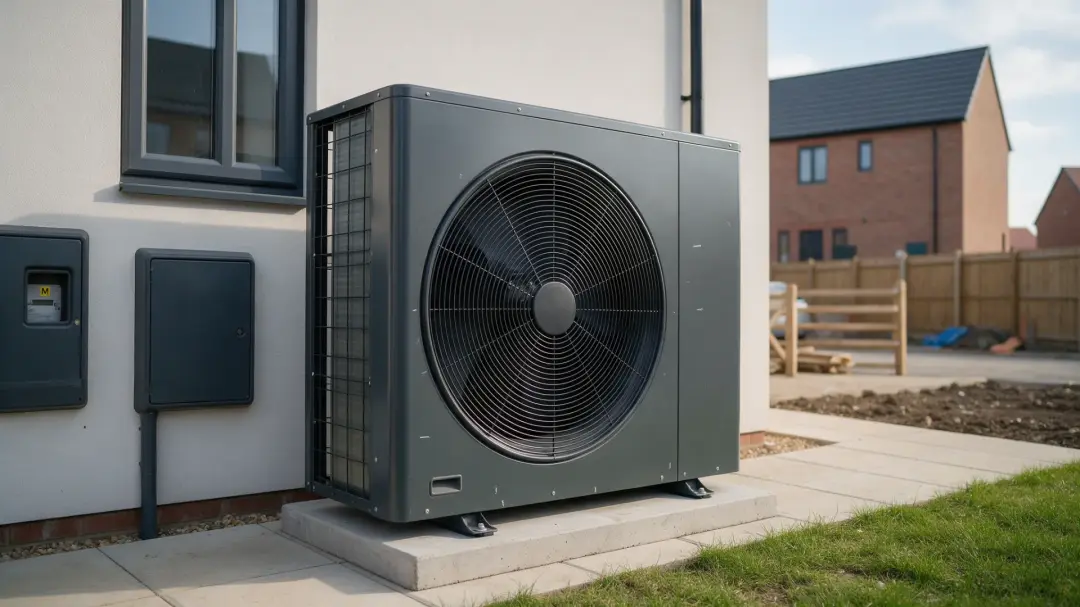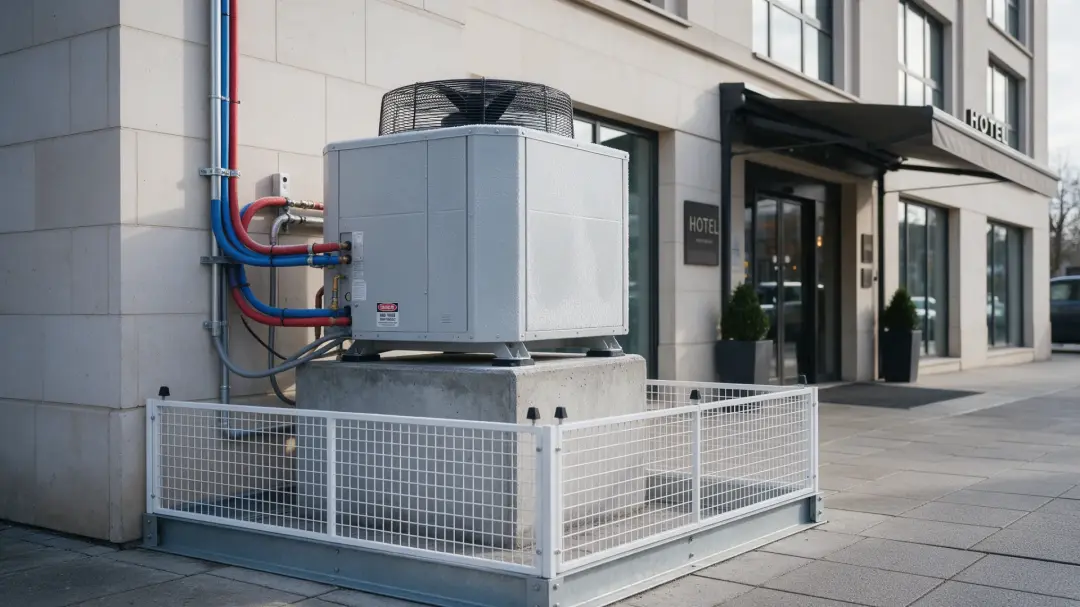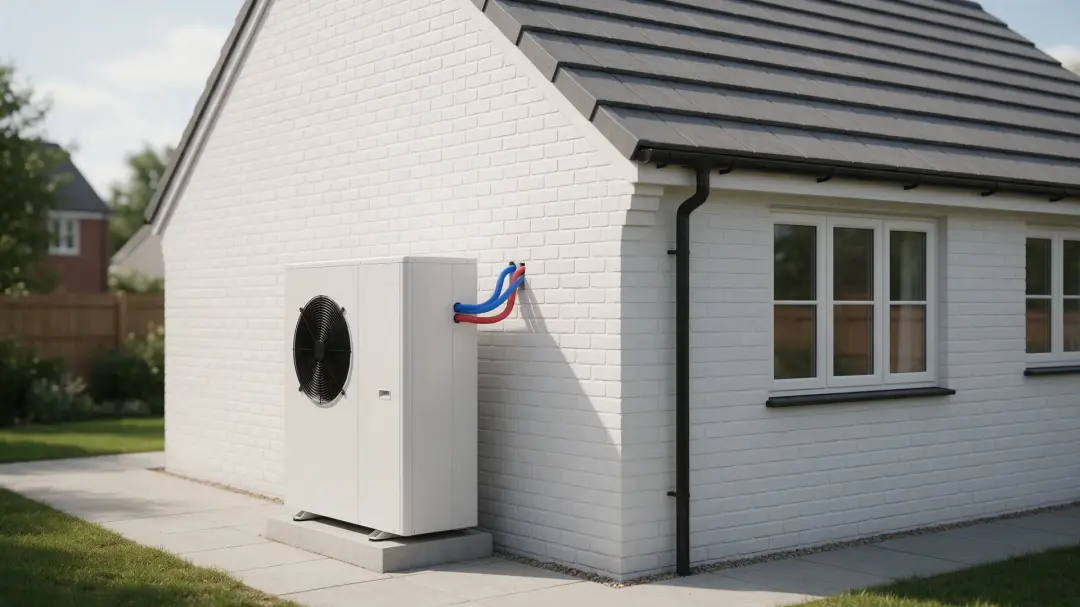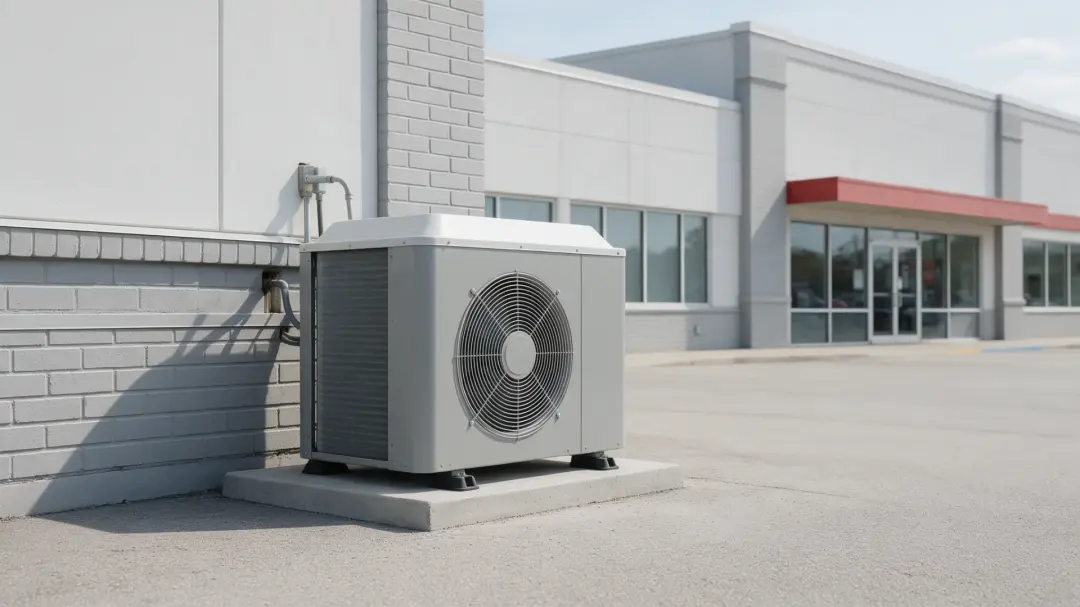
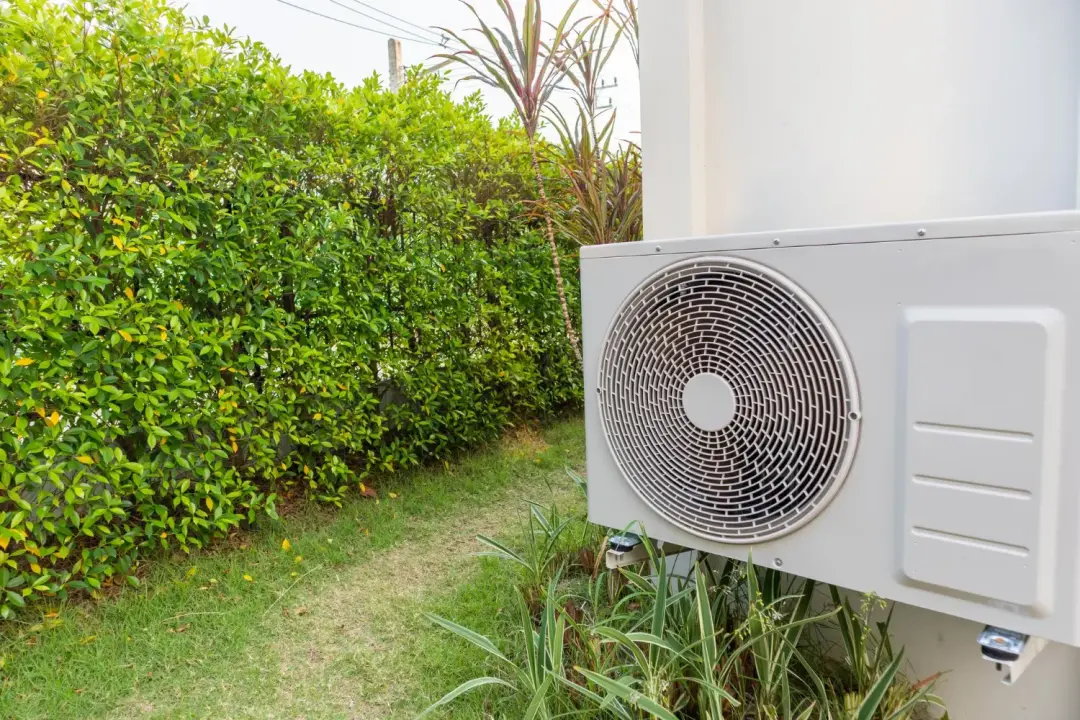
Air source heating uses an electrically powered heat pump to collect energy from outdoor air and deliver it indoors. An air-to-water system supplies radiators or water-based underfloor heating and usually a hot water cylinder. It transfers heat rather than burning fuel, which is why its useful heat output can exceed the electricity it consumes.
The four stages inside a heat pump
The outdoor fan moves air over a heat exchanger. A refrigerant absorbs energy and evaporates. An electric compressor raises the vapour’s pressure and temperature. In a second heat exchanger, the refrigerant releases energy into the heating water and condenses. An expansion valve then lowers its pressure, preparing it to collect more outdoor heat.
The refrigerant circuit remains separate from the water circulating through your home. Outdoor air does not travel through the radiators. Energy Saving Trust explains the refrigeration cycle.
Air-to-water and air-to-air are different systems
An air-to-water installation connects to a wet central heating circuit. Air-to-air equipment delivers warmth through indoor fan units instead, so it does not directly feed ordinary radiators or underfloor pipes. Establish which technology a quotation describes before comparing equipment or grants.
For a boiler replacement, practical questions include the existing pipework, cylinder space and whether each room’s emitters can meet demand at the proposed water temperature.
What does an efficiency figure mean?
A coefficient of performance, or COP, describes performance under particular conditions. COP 3 means 3kWh of heat for 1kWh of electricity at that operating point. The remaining energy comes from the environment; it is not electricity created by the machine.
Seasonal measures cover changing conditions. Ask which equipment and auxiliary consumption the estimate includes. A laboratory product rating and an installed system’s yearly performance are different measurements, so neither should be presented as a guaranteed household result.
Evidence from British homes
The Electrification of Heat Demonstration Project installed 742 heat pumps across a broad range of British housing. Its final reports, published in December 2024 and checked for this October 2026 guide, found successful installations in every property type tested. This supports assessing older homes individually rather than ruling them out by age alone. Read the project’s final findings.
Two similar-looking houses can have different heat losses because of insulation, ventilation, glazing and extensions. The research does not remove the need for a survey.
What happens when the weather turns cold?
Cold air still contains thermal energy. As outdoor temperature falls, the system generally works harder. Available output and efficiency depend on the model and required heating-water temperature. Frost can trigger defrosting, temporarily changing normal operation.
A designer checks capacity at the local winter design condition. Sizing from a mild-weather headline output risks leaving the property short of heat when it needs it most.
How heating and hot water reach your home
A conventional air-to-water arrangement alternates between space heating and cylinder heating under its controls. Stored-water requirements depend on occupancy, baths, showers and cylinder recovery. They should be planned separately from room heating.
Weather compensation adjusts heating-water temperature as outdoor conditions change. The aim is sufficient warmth without routinely demanding unnecessarily hot water. Stored-water safety settings must remain as specified by the installer.
From the heating cycle to an installation plan
For homeowners in Horsham, Air Source Heat Pumps West Sussex offers domestic system design, cylinder installation, radiator advice and controls setup. Ask for room-by-room heat loss calculations, emitter checks and a proposed outdoor position. These connect the theory to the way your property will actually be heated.
Summary
Air source heating moves outdoor energy into your home through a controlled refrigerant cycle. Its success depends on winter capacity, heat emitters and hot water storage working together. Explore our domestic installation service to discuss how those parts would fit your property.